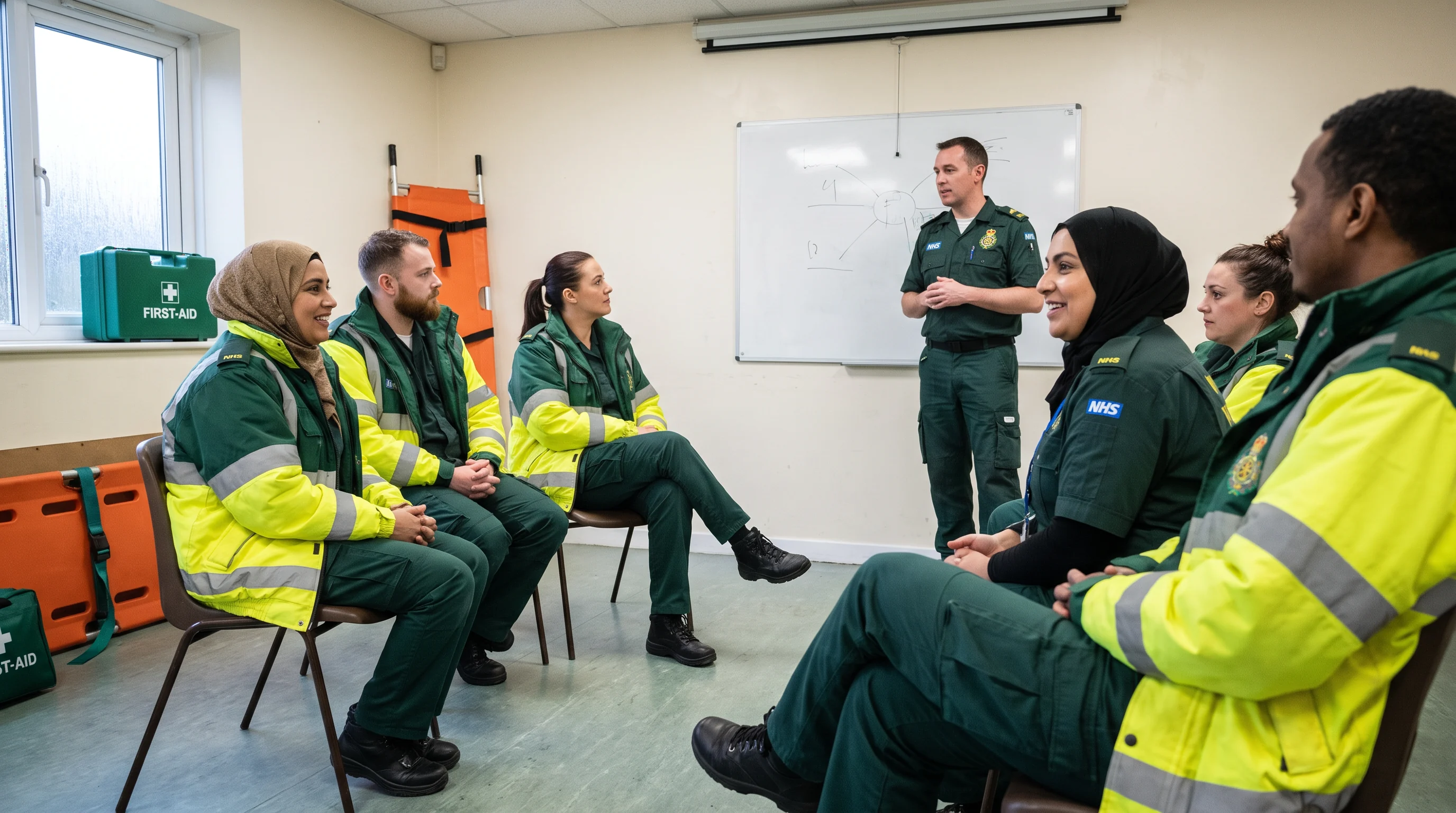
PMVA Training Built for Patient Transport Crews
A bespoke 2-day programme that gives your NEPTS crews the legal framework, de-escalation skills, and in-vehicle restraint techniques they need to manage behavioural crisis safely, with or without police support.
In brief: NEPTS Direct Delivery courses from ProActive Healthcare. This bespoke programme is the only BILD ACT certified PMVA course designed specifically for patient transport crews operating in confined vehicle environments with two-person teams.
Bespoke 2-day course designed specifically for NEPTS and patient transport crews
Covers legal framework, de-escalation, in-vehicle restraint skills, and realistic scenario work
Adapted to your specific vehicle types, fleet configuration, and contract mix
Gary Collins (RGN), 32 years of clinical nursing experience
We come to your base with all equipment and materials
Purpose-Built for Patient Transport, Not Adapted from a Ward
This programme delivers the same proven curriculum that already underpins our HEMS Air Ambulance training, contextualised for road-based patient transport. Your crews learn the legal framework, de-escalation techniques, and physical intervention skills they need to manage behavioural crisis in a moving vehicle with a two-person team.
Since Right Care Right Person rolled out, NEPTS crews are arriving first to behavioural crisis that police previously handled. They are managing detained patients under MHA conveyance powers, often without police support. This course gives them the training, the legal confidence, and the operational skills to do that safely.
The curriculum is genuinely pre-hospital in design, built for crews working in confined, two-person, uncontrolled environments. It is not a ward-based course adapted for transport. Every scenario, every technique, every legal reference is specific to the patient transport context.
Certified against the RRN Training Standards
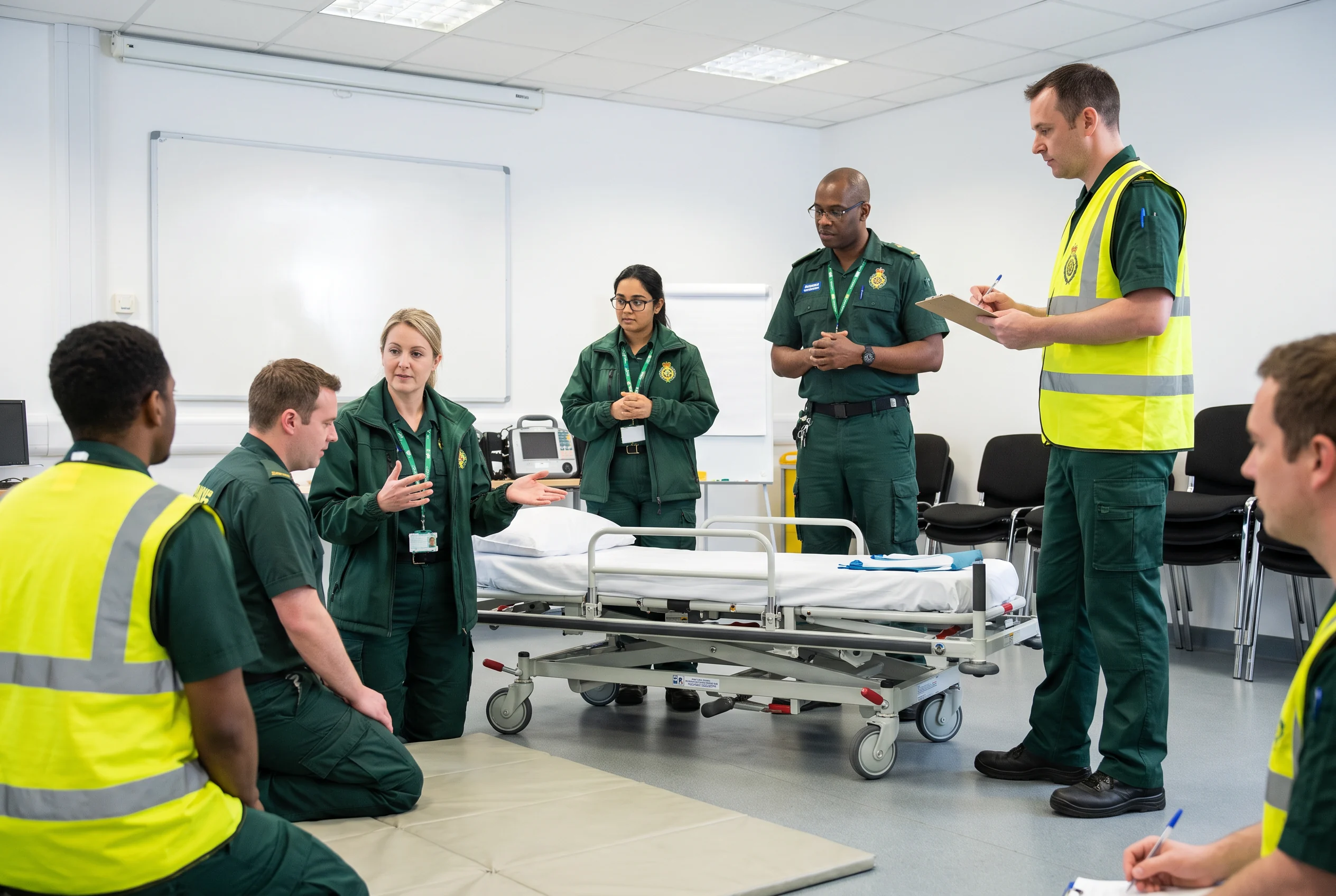
Four Core Areas of Training
The programme is structured around four essential areas, ensuring comprehensive coverage from legal foundations through to realistic vehicle-based scenario practice.
Legal Framework
MHA, Mental Capacity Act, Human Rights Act, and the section 137 'lawful custody' framework specific to patient transport conveyance.
Prevention and De-escalation
Verbal de-escalation in confined vehicle spaces, dynamic risk assessment, PACE approach, and STAMP early-warning recognition.
In-Vehicle Skills
Two-crew restraint mechanics, positional asphyxia prevention, post-RT monitoring, and Acute Behavioural Disturbance recognition.
Scenario Work
Realistic, scenario-based training in your actual vehicles, tailored to your fleet, routes, contract mix, and SOPs.
Two Days of Intensive, Vehicle-Based Training
The course content is tailored to your specific vehicle types, fleet configuration, contract mix, and standard operating procedures.
Legal Framework, Prevention and De-escalation
- Legal framework for physical intervention in patient transport: MHA 1983 (Chapters 16 and 17), MHA 2025 amendments, Mental Capacity Act 2005 sections 5 and 6, Human Rights Act obligations
- Section 137 'lawful custody' status and what it means for your crew during conveyance
- Right Care Right Person: where the boundary now sits, what your crews can and cannot expect from police, and how to operate safely when police are not present
- The Welsh Reducing Restrictive Practices Framework, including the explicit Welsh position on handcuffs in transport
- Verbal de-escalation in confined spaces: PACE approach, Project BETA model, STAMP early-warning recognition
- Dynamic risk assessment for agitated patients in a vehicle environment
- Documentation that holds up to inspection: what CQC and HIW now look for under the Single Assessment Framework
In-Vehicle Skills and Two-Crew Dynamics
- Vehicle restraint mechanics: seatbelt, harness, Unwin wheelchair clamp and stretcher restraint interactions, and the combinations that produce positional asphyxia
- Two-person crew choreography: the operational realities when one of you is driving, including pulling over safely, one-handed restraint release, and CPR in the saloon
- Acute Behavioural Disturbance recognition: hyperthermia, diaphoresis, imperviousness to pain, the post-struggle 'quiet' as a pre-arrest sign
- Post-rapid-tranquillisation patient monitoring during transit: airway, SpO2, capnography, NEWS2 escalation thresholds, post-RT vomiting and aspiration risk
- Police handover at place of safety, including documentation and escalation under MHA Code of Practice
- Specific patient profiles: dementia, learning disability, autism, post-RT mental health, and the 'Oliver McGowan' reasonable adjustments expected since 6 September 2025
Course Outcomes
By the end of this programme, your NEPTS crews will have the confidence and practical skills to manage patients safely in the most challenging transport scenarios.
Legal Confidence
A thorough understanding of MHA conveyance powers, section 137 lawful custody, and the legal framework for physical intervention during patient transport.
Clinical Recognition
Skills to recognise Acute Behavioural Disturbance, post-RT complications, and the warning signs that precede medical emergency during restraint.
Two-Crew Coordination
Effective communication and choreography for two-person crews managing behavioural crisis in a moving vehicle.
De-escalation Skills
Verbal de-escalation techniques adapted for confined vehicle environments, including the PACE approach and Project BETA model.
Vehicle-Specific Expertise
Practical skills tailored to your fleet: seatbelt, harness, wheelchair clamp, and stretcher restraint interactions.
RCRP Operational Readiness
Confidence to manage behavioural crisis as the first responder under Right Care Right Person, with or without police support.
Gary Collins (RGN)
32 Years of Clinical Nursing Experience
Staff supported in clinical settings
Physical intervention instructor
Gary brings over 32 years of clinical nursing experience and 8 years of specialist trauma management training for armed police officers and tactical medics. He designed the underpinning curriculum from the ground up for the unique challenges crews face when managing behavioural crisis in pre-hospital and transport environments, not as an adaptation of a ward-based course, but as a purpose-built solution.
As a BILD ACT Certified Trainer and the author of the forthcoming book "Reading the Room: Understanding Behaviour and De-escalation in Pre-Hospital Emergency Care", Gary combines deep clinical expertise with an evidence-based approach to behavioural crisis management that is grounded in law, informed by operational reality, and designed to keep both patients and crews safe.
4-Day Train the Trainer Programme
Want to build permanent internal training capability? Our 4-day Train the Trainer course includes the full 2-day curriculum plus two additional days of trainer development, equipping your selected staff to deliver BILD ACT certified training to colleagues on your schedule, at your base, year after year.
- Full trainer toolkit: manual, slides, scenario cards, assessments
- BILD ACT certification to deliver internally
- Ongoing support and annual revalidation
- Recoup investment within 2-3 training cycles
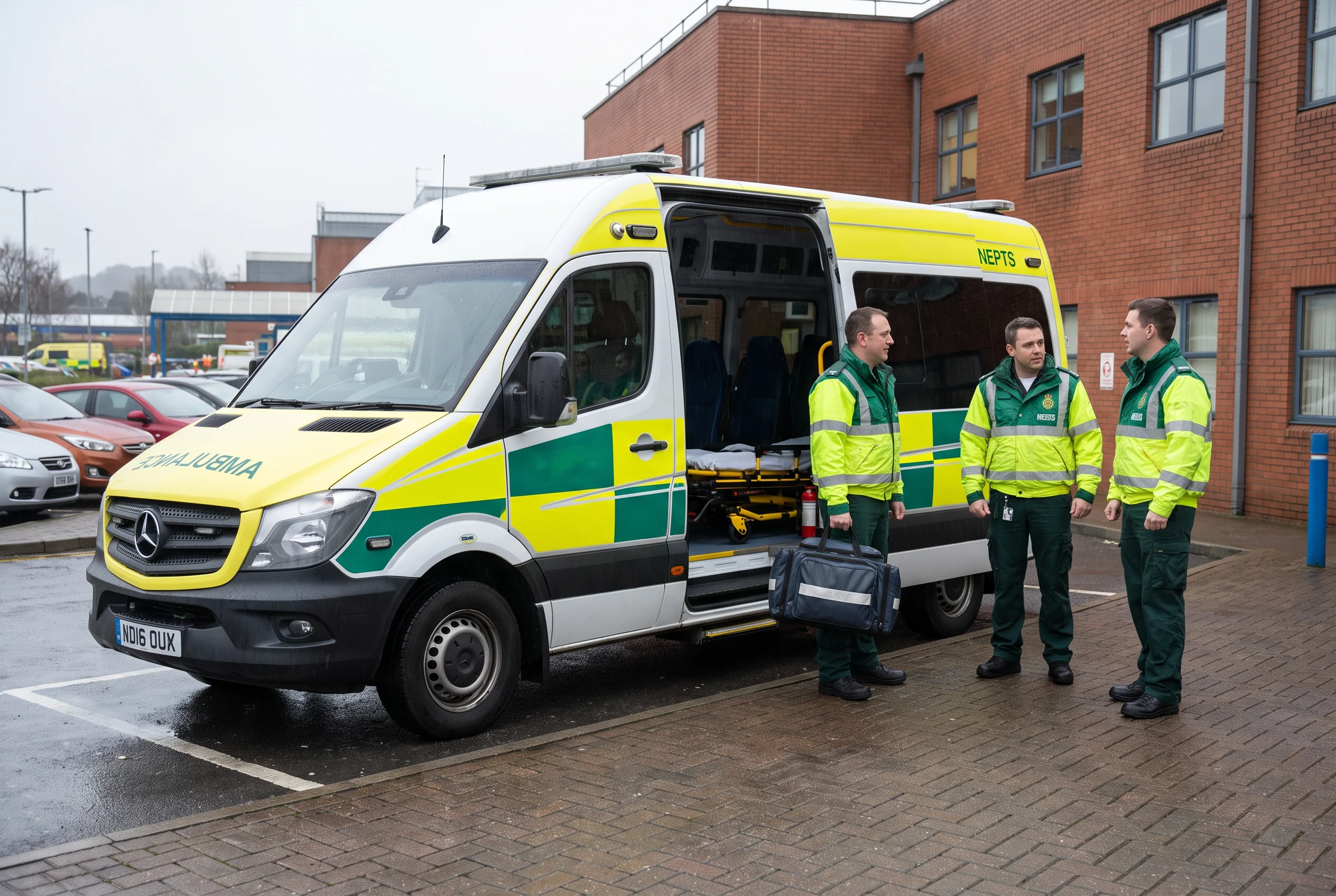
Your Crews Deserve Training Built for Their Reality
Not adapted from a ward-based programme. Not a generic conflict management qualification. Purpose-built for the unique challenges of patient transport: confined vehicle saloons, two-person crews, MHA conveyance, and the operational reality of arriving first to behavioural crisis under Right Care Right Person.
Get the full programme guide with detailed curriculum and pricing, or speak directly with our team.
Frequently Asked Questions
12 people with 1 Trainer, up to 18 people with 2 Trainers. These ratios are in line with the RRN Training Standards.
We deliver at your base or a venue of your choosing. This allows us to work with your actual vehicles and environment, making the training immediately applicable to real operations. For multi-site operators, we can sequence delivery across regional bases.
2 days. The usual start and finish times are 9.30 am to 4.30 pm, however, this can be flexible depending on your needs. There will be a mid-morning and mid-afternoon break as well as a lunch break. Lunch is not provided.
Click on the 'Download the PDF' button to receive your copy of our PDF info pack (delivered instantly via email). The pack includes full course details and costs.
Yes. Practical scenarios are adapted to your specific vehicle types, your contract mix (renal, oncology, secure mental health, bariatric, learning disability), and your standard operating procedures.
Yes. Day 1 covers MHA 1983 Chapters 16 and 17, the section 137 'lawful custody' framework, MHA 2025 amendments, the Welsh Reducing Restrictive Practices Framework, and operational scripts for working alongside (or in the absence of) police under Right Care Right Person. We treat this as core content, not a bolt-on.
Crews receive BILD ACT (RRN) certification, the nationally recognised standard expected by NHS commissioners, ICBs, CQC, and HIW. This satisfies CQC Regulation 18 and contractual requirements under the NHS Standard Contract.
This 2-day Direct Delivery course trains your crews in the skills themselves. Our 4-day Train the Trainer course trains selected staff to deliver the programme internally with full materials, assessment tools, and BILD ACT certification authority. Both options are available depending on your needs.
Gary Collins (RGN) has been qualified for 32 years with experience in medical, surgical and trauma settings. He has 8 years of experience in scenario-based trauma management training for armed police and public order medics. He designed the curriculum from the ground up for pre-hospital and transport environments.